Wyld’s Great Globe

Wyld’s Great Globe:

Following Richard Coyne’s post on Panoptic Man http://richardcoyne.com/2012/02/25/panoptic-man/

I thought it might be useful to post the following remarks about Panorama buildings.

For my wife’s 60th birthday, in 2007, we took our two sons and their partners to the Hague mainly to see the Netherlands Dance Theatre perform in their Rem Koolhaas designed headquarters.

Whilst there we came across the Mesdag Panorama.

Mesdag Panorama

Although it is only a couple of miles from Scheveningen this shows the beach there with some great theatrical features like piles of real sand all viewed from a central circular bandstand type platform that cleverly clips the sky and the immediate foreground.

http://panorama-mesdag.com/home?id=920#

O2 Memory Project

In 2008 our youngest architect son Gabby produced this Panorama inspired project shown here in Edinburgh, installed outside the Royal Academy.

O2 Memory Project

“This demountable touring installation was commissioned by O2 to coincide with the launch of their Bluebook technology. Inspired by a pre-cinema building, The Cyclorama, this building captures its location for a period of time. The drum continuously photographs the 360 degree panoramic view outside and displays it across a halo of screens inside. As viewers approach the screens their proximity moves the image forward and back in time. Using this intuitive haptic interface visitors can travel back in time to see historic views of the same location. The captured visual history was also broadcast online for remote viewing.”

http://news.bbc.co.uk/1/hi/technology/7355777.stm

W Hotel, Leicester Square

Gabby has also been involved recently in the upgrading of the former Swiss Centre in Leicester Square into the W Hotel.

W Hotel Leicester Square

“The ever-changing London skyline is captured by cameras mounted on the W Hotel roof in Leicester Square, London. Animated panoramic views of the last 24 hours are recreated across 600 lights diffused through specially designed fritted glass. The building façade is transformed by night into a digital light sensitive canvas.”

Barker’s 1792 Edinburgh Panorama was moved to Leicester Square in 1793.

Generally Leicester Square seems to have been the home or final resting place of several other Panorama including the splendid Wyld’s Great Globe.

Incidentally the W Hotel is named for Wyld and contains a Wyld Night Club and Bar.

Wyld’s Great Globe

Posted in Architecture | Tagged | Leave a comment

A Dream World

A Dream World:

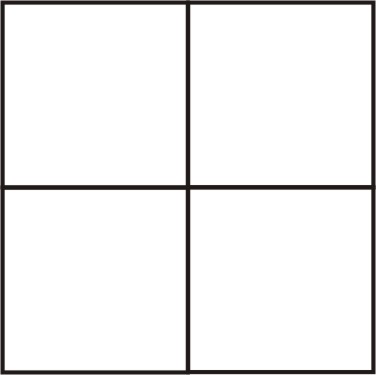
A Celestial Geometer imagines a world made up entirely of the following diagram

He asks a handy systems analyst newly arrived in heaven, after a life of endless toil working on CAAD, to design a computer database which will contain all the information which this simple world contains. He tells the systems analyst that he wishes him to do this so that he, the Geometer, may ask questions of the database and so elucidate this strange world’s properties.

The by now eager systems analyst proceeds as follows (though unknown to him it matters little how he proceeds)

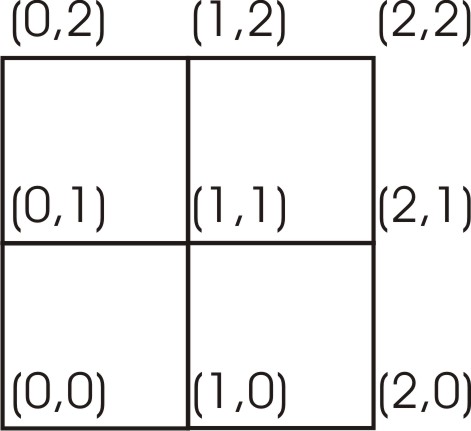
In his former life having been an avid hill walker the world he is now presented with reminds him of a map grid so he unconsciously, or less likely consciously, starts his task by labelling the intersections of his grid world

He now feels happier, this is now a more familiar world, and he makes a list of all the lines, defining a line by its end points

Line (0,2) to (2,2)

          2 (0,1) to (2,1)

          3 (0,0) to (2,0)

          4 (0,0) to (0,2)

          5 (1,0) to (1,2)

          6 (2,0) to (2,2)

The systems analyst then proudly reports to the Geometer that his database contains all the information in this special world.

The Geometer asks him if the database really does hold all the information.

The analyst says that indeed it does and what is more the design is so neat that it fits inside the smallest computer.

The Geometer says in that case he will ask a question and the following conversation ensues:-

G –     How many squares are there in this world of yours?

A –      You will have to define what a square is

G –     Everyone knows what a square is; it is a right angled equal sided quadrilateral

A –      You will have to define …

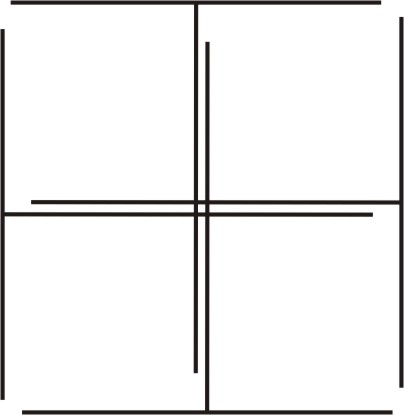
No… Now I could have designed the database so that the inherent squareness of this world was more apparent.

It would just need a list of all the squares rather than a list of all the lines

Square 1 (0,0) (1,0) (1,1) (0,1) (0.0)

               2 (1,0) (2,0) (2,1) (1,1) (1,0)

               3 (1,1) (2,1) (2,2) (1,2) (1,1)

               4 (0,1) (1,1) (1,1) (0,2) (0,1)

Of course I could probably make this more compact

G –     Wouldn’t any description like this make it more difficult to answer the question “How many lines are there?”

A –      Yes but I could write a program to find the lines from the squares or the squares from the lines but it would take some time for me to have these written and as I would be using my knowledge of squares to design the program it might be simpler just to add the list of squares to the original database, of course this might mean a larger computer.

G –     Don’t forget the fifth square!

A –     No, of course not

G –     Perhaps it is time I asked another question?

How many ‘T’ shapes are there in this world; before you ask for a definition with tops and stalks both 2 units long?

A –      Well again this would need a program but it would be quicker if we just added a   further list to the database.

G –     It seems to me that every time I ask a question of this database, which you told me, holds all the information about this simple world, you have to write an ad-hoc program to find the answer or you simply increase the size of the database by adding the answer to it. For your database really to hold all the information in this world wouldn’t you have had to build in all these possibilities?

A –      Yes I would but to do this I would have needed to know not only all the questions you could ask but also all the answers or at least a way of finding them

G –     This seems like an infinite regress. If we know the answers this thing can tell us them, if we don’t it can’t. It is not much use is it?

This was written in 1981 in response to the intention of the Scottish Special Housing Association, following the successful development of their House Design and Site Layout Programs, to develop a property database to describe in detail their 100,000 houses.

An important moral was that real things are sometimes best represented by themselves.

The story was used, with permission, in Peter Swinson’s 1981 paper Logic Programming: a computing tool for the architect of the future.

Bibliography

ARU research project A25/SSHA-DOE: House design: Application of computer graphics to architectural practice

Bijl, A., Shawcross, G 1974 Housing site layout system
Computer Aided Design: Volume 7 Number 1 January 1975

Swinson, P. S. G. 1981 Logic programming: a computing tool for the architect of the future


Posted in Architecture, Databases, Housing | Tagged , , | Leave a comment

Aesthetics

Aesthetics:

Successor to Plain and Provisional investigating what sort of aesthetics might be appropriate and sustainable.

implicit order

Repetition, grouping, alternation etc of elements effects perceived order.

pattern                                                  palette

      sequence

      grouping

      alternation

      rhythm

      beat

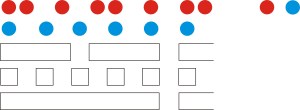
proximity effect

Proximity of units takes prevcedence over colour, type, sequence or shape

pattern                                              palette

random elements

A number of procedures can be used to generate random or seemingly random sequences of elements.

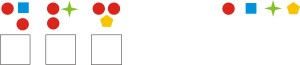
The first method is the continuing random selection from a fixed palette of elements.

pattern                                                  palette

Note red dot, yellow pentagon repeat and blue square repeat.

pattern                                    palette        modified    selected

The second method ensures that all elements are selected before an element can be selected again (12 tone method)

Elements are again selected randomly but once an element has been selected it is removed from the palette. Thus ensuring that each element is selected before any is selected twice.

Note the need to use all elements in the palette before the palette is refilled produces a secondary module, but very difficult to read.

dealing with randomly selected elements

Given that elements may be selected (more or less randomly) by owners etc how best to deal with this aesthetically?

use a reduced palette.

pattern                                                palette

Use a single material or colour (or a very limited set of materials or colours)

This requires the designer to have full control of the selection of the elements.

This may be true when the scheme is being built but over its life will become less and less so.

emphasize frame

pattern                                        palette

limited palette addition above still needs designer control


much weaker where the strong frame is itself coded.

Examples of emphasing the frame are:- the sonata form, bottle in rack designs, the unite d’abitation marseille etc

obscure

pattern                                                                  palette

emphasize ground

pattern                                                                     palette

limited palette elements above again need designer control

use camouflage

pattern                                                                     palette

limited palette elements need designer control

what works

Posted in Aesthetics, Housing | Tagged , , | 1 Comment

Plain and Provisional

Plain and Provisional:

A largely visual argument occasioned by 2 well known Manchester housing schemes.


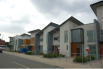
1 Lovell East Manchester Exemplar Housing
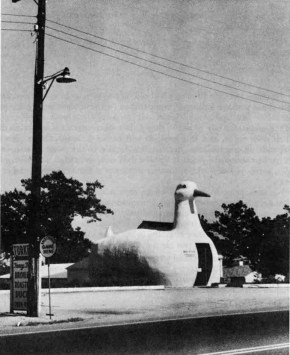
     

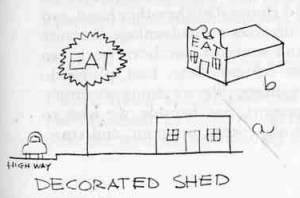
In Venturi and Brown terms, this scheme is definitely a Duck.

Plans manipulated to provide interesting interiors and exteriors.

Unusual slung mono pitched roof, already showing tendency to lift.

Highly insulated heavy-weight construction displays an array of clip-on modern architectural materials, terracotta rain shield tiles, timber and render.

Inside is unbearably hot on a warm day.

Lightweight construction could give just as good insulation and be more thermally responsive. Would also give reduced carbon footprint.

2. Fat Development in New East Manchester
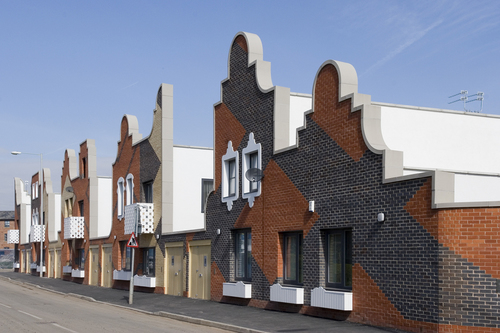
 

definitely a Decorated Shed.

 the daddy of them all.

Note the Dutch gable in the sketch and the similarity of the name (coincidence?)

House Types are relatively straight forward with decoration appropriately facing out towards the street.

Still something of a Post Modern in-joke.

Some House Building Productivity Basics.

The total manhour requirement for the average house is about 1300hrs, the best recorded figure is about 600hrs.

This large differential is explained by poor detailed design rather than lack of prefabrication.

Services installation and decoration both take more time than the erection of the shell.

If you build 50 identical houses one after the other, the manhour requirements for each will still be reducing at the 50th house.

That is the management and operatives are still learning.

If you build 30 houses of one type followed by 10 of another type, the manhour requirements will fall for the first 30 then rise when the new type is started.

A type returned to will restart at a higher level than it finished at.

The Lovell Development in particular is fighting against economic logic and as an exemplar development is also being heavily subsidised both in terms of finance and design effort.

There is a long history of ambitious housing proposals petering out when widely applied and put under financial pressure:-

Parker Morris minimum space standards became maximum standards under the pressure of the Cost Yardstick, leading to the boring, poor quality Local Authority housing of the 70’s.

Early Housing Corporation financed schemes (small and complex) being straightened out under financial pressures so that they are now large, simple and very Public Authority in spirit.

The question to ask is, is it possible to have plain, economically sensible housing which is also attractive and desirable.


Plain need not necessarily be unattractive.

One of the advantages of plain is that it gives an opportunity for self expression, by the occupiers rather than the designers.

The Lovell scheme and to an even greater extent the FAT scheme are exercises in designer expression.

The Lovell scheme gives purchasers a choice of kitchen fittings, handles, worktops and I think laminate flooring (all internal choices).

The exterior treatment is however severely controlled as it is in the FAT scheme, with its exuberant variety really being just an imposed overall pattern.

It is difficult to see either of these schemes as being aesthetically sustainable.

The Lovell design if repeated will become straightened out as future schemes receive less subsidy, dodgy cladding details are simplified, external wall areas are reduced, roofs secured etc.

The FAT scheme is great as a one-off but could only be repeated in a sort of patchwork quilt manner, changing the balcony colour, brick pattern etc. The danger with this sort of very rich appearance is that, even if such changes are made, each patchwork piece will still look the same and in the process removes the unique sense of place which this scheme has.


Change the patterns but the patches still look the same

In Scotland slightly less exuberant versions of this sort of design have come to be called Arran Sweater designs (the brickwork tends to be highly patterned but in just one or two similar pale colours)

A possible way forward is to give emphasis to process rather than image, and to let the real variety that customisation can bring flourish.

This implies a loosening of control over the image of the scheme and making much of the design provisional and available for choice, customisation and future change.

Assuming a limited number of simple, well honed terraced house types with parking attached to the curtilage, how can the design be made more provisional?

Can rain screen cladding be, a choice, left to be fitted by the occupier? (he might never get round to doing it) etc.

Can railings, gates etc be, a choice from a limited range, a free choice or omitted.

Can the front garden be paved as somewhere to show off your motor or keep your dog?

Can you choose to have the garden turfed or professionally landscaped before you move in? Think pergolas, trellises, ponds, containerised trees etc.

Can internal finishes be chosen, omitted or reduced in scope?

(1 coat cheap emulsion, so purchaser can decorate, omit laminate flooring etc).

Can some components be freely chosen, doors, sanitary ware, even windows?

Can internal walls be omitted, extensions and conservatories easily added?

Above all, designers and contractors need continuity of work so that types, detailed design affecting productivity, choices and processes can be refined and improved (a single scheme does not allow this to happen)

So let’s have it plain and provisional.

(an efficient building process and a sustainable, visually interesting environment)

This is the text of a presentation made in Manchester to the Board of Bellway Homes.

Posted in Aesthetics, Architecture, Housing | Tagged , , | Leave a comment

Buffon’s American Degeneracy

Buffon’s American Degeneracy:

George Louis Leclerc, Comte de Buffon (1707-1788) disliked what he thought was the arbitrary nature of Linnaean classification.

Buffon thought the natural world ought to be understood in all its complexity and consequently produced his monumental (36 volume) Histoire naturelle.
In Volume 5 (1766) he discussed the apparent disparity in the diversity and size of quadrupeds from the Old and New Worlds: –

“In America, therefore, animated Nature is weaker, less active, and more circumscribed in the variety of her productions; for we perceive, from the enumeration of the American animals, that the numbers of species is not only fewer, but that, in general, all the animals are much smaller than those of the Old Continent. No American animal can be compared with the elephant, the rhinoceros, the hippopotamus, the dromedary, the camelopard [giraffe], the buffalo, the lion, the tiger, &c.”

Thomas Jefferson led the outraged response to convince the French naturalist of his error. He arranged for Buffon to receive the skin and antlers of a moose as well as the antlers of deer, caribou and elk and the skin of a panther; all of which he hoped would convince Buffon that New World quadrupeds were at least the equal of those in the Old World.

Despite being so spectacularly wrong, Buffon has recently re-emerged as a sort of standard-bearer of a less mechanistic view of classification systems.

In Sorting Things Out: Classification and Its Consequences, Bowker and Star (1999), it is suggested, after Taylor (1995), that there are important differences between Aristotelian classification and Prototype classification. They explicitly associate Aristotelian classification with Linnaeus and Prototype classification with Buffon and characterise the differences as follows:-

“An Aristotelian classification works according to a set of binary characteristics that the object being classified either presents or does not present. At each level of classification, enough binary features are adduced to place any member of a given population into one and only one class.”

“According to Rosch’s prototype theory, our classifications tend to be much fuzzier than we might at first think. We do not deal with a set of binary characteristics when we decide that this thing we are sitting on is a chair. Indeed it is possible to name a population of objects that people would in general agree to call chairs which have no two binary features in common.”

Prototype theory proposes that we have a broad picture in our mind of what a chair is; and we extend this picture by metaphor and analogy when trying to decide if any given thing that we are sitting on counts.”

Bibliography

Buffon, Georges Louis LeClerc, Comte de. 1749-1788.
Histoire naturelle, générale et particulière.
Paris: Imprimeries royale.

Bowker, G. C. and Star, S. L. (1999)
Sorting Things Out: Classification and its Consequences
MIT

Taylor, J. R. (1995)
Linguistic Categorization: Prototypes in Linguistic Theory
Oxford, The Clarendon Press

Rosch, E. and Lloyd, B. eds (1978)
Cognition and Categorization
Hillsdale, N. J.:  L. Erlbaum Associates
:

Posted in Classification, Morphology | Tagged | Leave a comment

Mimicry and Bad Taste

Mimicry and Bad Taste:

Originally this was a reply to Richard Coyne’s blog on Inconspicuous Architecture http://richardcoyne.com/2011/12/31/inconspicuous-architecture/

I was frustrated at not being able to insert images into my response so decided to set up this blog.

I hope this isn’t nit-picking or spoiling a good story with needless facts, but this sent me to my battered copy of Mimicry in Plants and Animals, Wickler (1968).

It appears that what Roger Caillois called mimicry might now be called camouflage or cryptic behavior; with examples such as: –

Flat fish matching the seabed background to make it harder for predators to find them.

Flatfish, Sole (Solea solea), on artificially dark background

Flatfish, Sole (Solea solea), hidden on sandy background

Spiders’ webs with pseudo-platforms, which appear to be occupied by spiders, reducing the chance of the real spider being predated in any particular attack.

In both cases the individual’s chances of survival are increased.

Mimicry as such seems to have the following basic forms: –

In Batesian Mimicry one species (the mimic) comes to resemble another unpalatable species (the model). The resemblance can be visual, olfactory, acoustic or behavioral. It is important that the model is unpalatable rather than actually poisonous so that predators have a chance to learn from their mistakes.

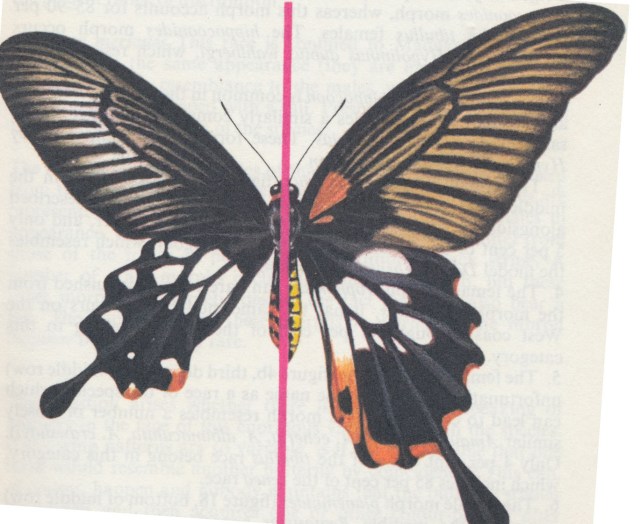
Swallow-tailed butterfly, model on left slightly lager mimic on right

In Müllerian Mimicry several species, all of which are unpalatable, in effect club together to optimise predator learning. If these all give the same signal to a predator then they reduce their individual share of the necessary teaching predation.

Batesian and Müllerian Mimicry Rings

Mimicry rings in vertical columns. Models are above horizontal grey lines, mimics below. Batesian mimicry is similarity across a horizontal grey line. Müllerian mimicry is similarity between butterflies that are all above a grey line.

Mertensian Mimicry is where a poisonous species mimics a less poisonous but lesson teaching species.

In these cases it is in the interest of both mimic and model that predators can easily recognize them. They therefore need to announce their presence rather than hide it.

Aggressive Mimicry is where a predator (or parasite) mimics another species that is harmless to the prey (or host) species allowing the predator (or parasite) to avoid detection. The primary example is the Zone-tailed hawk which has evolved to resemble vultures. Vultures do not threaten the hawk’s prey because they are carrion feeders.

Brood-parasites such as cuckoos are also an example of aggressive mimicry.

Eggs of brood-parasitic cuckoos and their hosts

In each pair host egg to the left of (the usually larger) cuckoo egg. Grey lines separate cuckoo species. European cuckoo is top left section, with top left to bottom right eggs of reed-warbler, blue-headed wagtail, red-back strike and redstart.

Mimesis is between Camouflage and Mimicry and is where a species takes on the form of another object or organism to which signal receivers are generally indifferent.

In both these later cases it is not in the interests of the mimic to be easily recognised for what it is.

In architectural terms we can choose to blend in, camouflage, mimesis or aggressive mimicry; or we can choose to stand out and risk being accused of bad taste, Batesian, Müllerian or Mertensian mimicry.

Bibliography

 
Wickler, W. (1968) Mimicry in plants and animals
Translated from the German by R.D.Martin
World University Library: Weidenfield and Nicolson: London
Posted in Morphology | Tagged , | Leave a comment